Periodic Table Element Project Ideas
By the School Project Lab Team · Updated · 5 min read · Middle School (6–8)
In this guide
An element project asks your student to become an expert on one element from the periodic table and present what makes it special. The most popular formats are posters, 3D Bohr models, element superheroes and element cereal boxes, and each one combines chemistry facts with creativity. Below you'll find what to include, step-by-step instructions for several formats, safety notes, a time and cost guide and a checklist.
What Every Element Project Should Include
Teachers usually want the same core information, no matter the format. Have your student gather these facts first.
- Name and chemical symbol, such as carbon (C) or sodium (Na).
- Atomic number, which equals the number of protons.
- Atomic mass.
- Number of protons, neutrons and electrons. For a neutral atom, electrons equal protons. Neutrons are usually found by subtracting the atomic number from the rounded atomic mass.
- Group or family, such as noble gases, alkali metals or halogens.
- Classification: metal, nonmetal or metalloid.
- State at room temperature: solid, liquid or gas.
- Discovery: who discovered or identified it, if known, and roughly when.
- Common uses in everyday life, industry, medicine or technology.
- Fun facts that make the element memorable.
Check the rubric for anything extra, such as electron configuration, isotopes or a bibliography.
Parent tip: Help your student do the proton, neutron and electron math out loud together. For example, carbon has atomic number 6 and an atomic mass of about 12, so it has 6 protons, 6 electrons and 12 − 6 = 6 neutrons. Getting this right is often a big part of the grade.
Choosing an Element
If your student gets to choose, pick an element that has plenty of information and real-life connections.
Easy, interesting choices include:
- Carbon: found in all living things, pencils (graphite) and diamonds.
- Oxygen: the gas we breathe, part of water.
- Neon: glows in bright signs; a noble gas.
- Gold: jewelry, electronics and history.
- Copper: wiring, pipes, and it turns green over time.
- Silicon: computer chips and sand.
- Helium: balloons, and it's lighter than air.
- Iron: steel, magnets and the iron in our blood.
Element Project Ideas
Element Poster
- Divide poster board into sections for facts, the atom model, uses and fun facts.
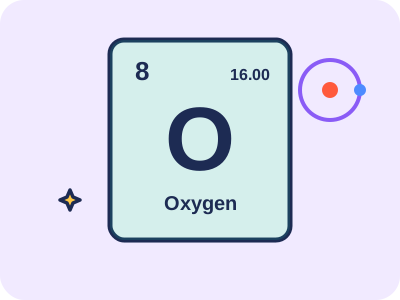
- Draw a large element tile like the one on the periodic table, showing the symbol, atomic number, name and atomic mass.
- Add a labeled Bohr model drawing.
- Include pictures of everyday uses.
- Use clear headings and big, neat lettering.
3D Bohr Model
A Bohr model shows the nucleus in the center with electrons orbiting in shells.
- Make the nucleus. Glue small pom-poms or foam balls together in two colors for protons and neutrons.
- Make the shells. Bend pipe cleaners or wire into rings, or cut rings from foam board. The first shell holds up to 2 electrons, and for the lighter elements most middle school projects use, the second holds up to 8.
- Add electrons. Attach small beads or pom-poms in a third color to the rings.
- Connect it. Hang the rings around the nucleus with string or stick them on a base with skewers.
- Add a key. Label which color is a proton, neutron and electron.
Lighter elements, with 20 or fewer electrons, are easiest to model accurately. Cutting foam and using hot glue or skewers should be done or supervised by an adult.
Element Superhero
- Turn the element into a superhero or villain based on its properties.
- Give it a name, costume and powers. Neon might glow in the dark; sodium might be "explosive" around water, described as a power, never tried at home.
- Include a "real science" box explaining the true facts behind each power.
- Draw the character or create a comic strip.
Element Cereal Box
- Cover an empty cereal box with paper.
- Design the front with a fun cereal name, like "Carbon Crunch."
- Use the side panel as a "nutrition label" listing protons, neutrons, electrons and atomic mass.
- Put the uses and fun facts on the back, with a puzzle or game.
- Include a "prize inside" fact.
Other Ideas
- Element trading card set for several elements in the same family.
- Element advertisement or commercial video selling the element's uses.
- Element children's book that explains the element simply, written for a younger reader.
- Periodic table family chart comparing the elements in one group.
Researching and Presenting Your Element
Good sources make the facts easy to trust. Start with the class textbook, a printed periodic table from the teacher, library science books and educational websites from universities, museums or science agencies. Have your student write down every source as they go so the bibliography is ready at the end.
Watch for small number mix-ups. Atomic mass is often listed with decimals, such as 12.011 for carbon, so round to the nearest whole number before finding neutrons. If two sources disagree, ask the teacher which periodic table the class uses.
When it's time to present, a simple order works well:
- Introduce the element with its name, symbol and one surprising fact.
- Show the atom and explain the protons, neutrons and electrons.
- Share where it's found in nature and in everyday life.
- End with a fun fact or question for the class, such as "Can you guess which element is in your pencil?"
Practicing two or three times out loud helps your student sound confident and stay within the time limit.
Safety Notes
Element projects should never involve handling real chemical samples unless a teacher specifically approves and supervises it. Many elements are toxic, reactive or dangerous. Use models, pictures and descriptions instead. Common, safe items like aluminum foil or a copper coin can sometimes be used to show examples if the teacher allows it. Adult supervision is needed for hot glue, craft knives and sharp skewers.
Time and Cost Estimate
| Item | Typical range |
|---|---|
| Research | 1–3 hours |
| Planning and sketching | 30–60 minutes |
| Building or designing | 2–5 hours |
| Typical cost | $5–$20 |
| Difficulty | Easy to moderate |
Most supplies are inexpensive: poster board, markers, pom-poms, pipe cleaners and a recycled cereal box. Foam balls and boards are available at craft and dollar stores.
Quick Checklist
Tap the boxes as you go — progress saves on this device only.
- Read the assignment and rubric
- Choose your element
- Find the symbol and atomic number
- Count protons, neutrons and electrons
- Find the group and state of matter
- Learn three everyday uses
- Pick a project format
- Sketch your design
- Ask an adult for help with hot glue or cutting
- Build or draw the project
- Double-check your numbers
- List your sources
An element project turns one small square on the periodic table into a story your student can tell with confidence. Let them pick the element, do the research and choose the creative format, while you help double-check the math and keep the build safe.
Frequently asked questions
What information should an element project include?
Most element projects include the name, symbol, atomic number, atomic mass, group or family, number of protons, neutrons and electrons, state at room temperature, discovery and common uses. Check your teacher's rubric for the exact list.
How do I help my child pick an element?
Choose an element with plenty of kid-friendly information and interesting uses, such as carbon, oxygen, neon, gold, copper or silicon. Elements in everyday objects make the project easier to explain.
Should my child bring a real sample of the element?
No, unless the teacher specifically asks and approves it. Many elements are hazardous or reactive, so use pictures, models or safe everyday items like a copper penny or aluminum foil only if allowed.